.png?sfvrsn=a4dc1c5f_6)
How One Scientist Committed to Helping Shape the Next Generation of Public Health Laboratory Professionals
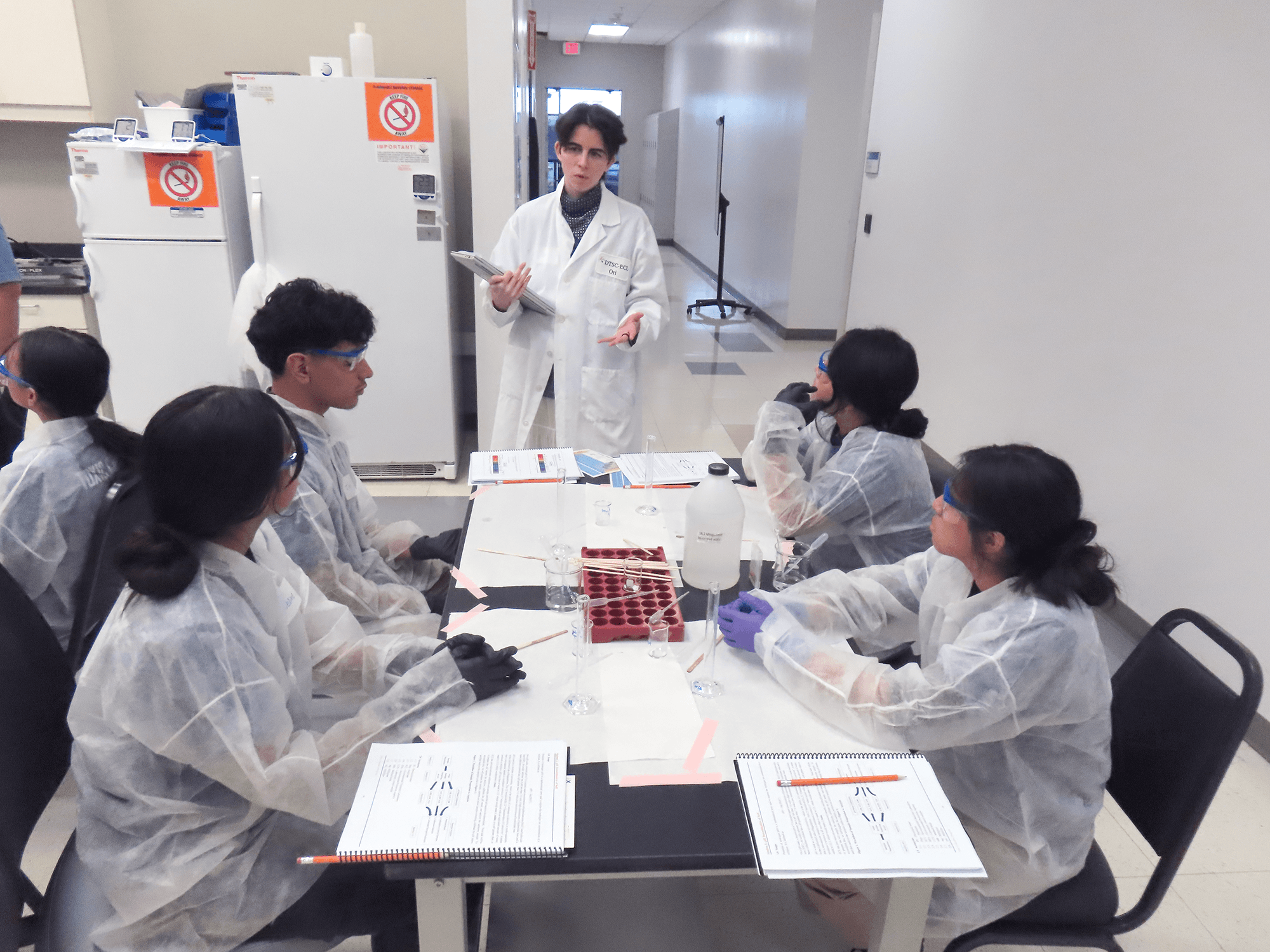
Ori Roe is a research scientist at the California Department of Toxic Substances Control (DTSC) and a passionate advocate for public health. Roe is trained in analytical chemistry, helping, for example, to analyze soil samples taken from locations impacted by wildfires, such as those that occurred recently in Los Angeles.
In addition to their laboratory duties, Roe—in collaboration with other DTSC staff and volunteers—has organized and developed the curriculum for DTSC’s student outreach program, Toxic Crusaders. As a member of APHL’s Public Health Laboratory Ambassadors Program, which promotes public health laboratory careers to students, Roe uses their knowledge of environmental health to shape the next generation of public health laboratory science professionals.
We caught up with Roe to learn more about their work and how they’re using outreach to build trust in science and government.

What exactly is Toxic Crusaders, and how did you get involved?
Our outreach program, Toxic Crusaders, was born from a collaboration between DTSC and APHL. We target high school students from underserved communities such as those located in low-income, heavily polluted and/or rural areas. We hope the program will help give these students the tools for mitigating exposure to pollution in their communities and preparing for higher education.
Toxic Crusaders is a full six-week program with one-day laboratory events. It involves five weeks of virtual workshops that provide background and context to prepare students for Week 6, where they visit the laboratory for a full day of hands-on laboratory events. The virtual workshops are presented to each class of students by a DTSC volunteer once a week and are comprised of a lecture, slides and interactive activities.
The laboratory visits feature three experimental activities, each of which exposes students to different bench skills such as pipetting and using balances. The activities also introduce concepts such as quality control and calibration to help develop critical thinking skills and prepare STEM-oriented students for higher education. The 2024-25 Toxic Crusaders program featured the following experiments for which students were asked to characterize their samples as hazardous or not:
- pH measurement of contaminated soil,
- Toxicity Characteristic Leaching Procedure to identify and measure toxic metals in contaminated soil, and
- Determination of diesel range organics in used oil.
One goal of Toxic Crusaders is to help students see that government can work for them, and that people working in public service are doing so with integrity and purpose. By connecting them with real scientists and giving them a behind-the-scenes look at what we do, we aim to plant seeds of trust and interest in the public sector.
Working with APHL has given me the opportunity to learn about a wider array of public sector STEM roles, expanding the way I think about engagement. Before this, I had only worked for the California Environmental Protection Agency and interacted with a small number of professionals from other agencies. Now, I have a much larger toolbox to draw from when planning how to engage students.
How is the Toxic Crusaders curriculum developed, and what kind of feedback have you received?
Each year, our curriculum is designed to align with the current initiatives of DTSC. For example, the 2024–25 program focused on hazardous waste. We collaborate closely with experts from our Hazardous Waste Management Program to develop relevant, accurate content. Over the summer, we produce workbooks, problem sets and slides for a series of five one-hour virtual workshops delivered weekly to each classroom.
Importantly, we don’t ask teachers to present the material themselves. Instead, the experts who help create the curriculum also join classrooms virtually to teach it. Teachers help with classroom management and may adapt the content if they wish, but our team handles the core instructions.
In 2024–25, we reached 582 students across 12 California high schools, a major increase from 230 students at just two schools in the previous year. We evaluate program success using pre- and post-program assessments, and we consistently see a ~20% improvement in student understanding. The feedback has been overwhelmingly positive—from both educators and university partners.
What broader impact do programs like Toxic Crusaders have on students and communities?
Toxic Crusaders is more than just an educational program; it’s a civic engagement initiative. Many of the outreach programs shared by fellow Public Health Laboratory Ambassadors serve as models for long-term public trust building. By introducing students to STEM topics through a public health lens, we’re doing more than preparing them for careers. We’re helping them build positive associations with government agencies. Even for those who don’t pursue science or public service, this kind of early exposure fosters a better understanding of how public health impacts their everyday lives.
What have you learned from working on Toxic Crusaders and being an ambassador?
My work with Toxic Crusaders and APHL over the last year has taught me how to connect abstract concepts to meaningful daily interactions. It is hard for students to conceptualize the toxicity of an invisible and odorless chemical, and it is similarly challenging to feel empowered by a government that you cannot participate in yet as a high school student. It has been both a challenge and a learning opportunity to figure out how to illuminate these connections. When students can connect behavior to consequences, an abstract toxic chemical becomes real to them. When they see photos of hazardous waste being dumped into rivers by industry, followed by data of cancer rates skyrocketing in the years following, the abstraction is lifted.
Similarly, when students see and work alongside government employees who take pride in protecting public health, that passion impacts the students. Maybe the program inspires them to consider a job in the public sector, or maybe it simply instills confidence that many governmental bodies are composed of well-intending people trying to make the world better.