National Biomonitoring Network

The National Biomonitoring Network (NBN) works to advance the science of human biomonitoring to address environmental health questions, ensure quality practices and produce comparable biomonitoring data.

Questions?

Contact the Environmental Health team: [email protected]

About the National Biomonitoring Network

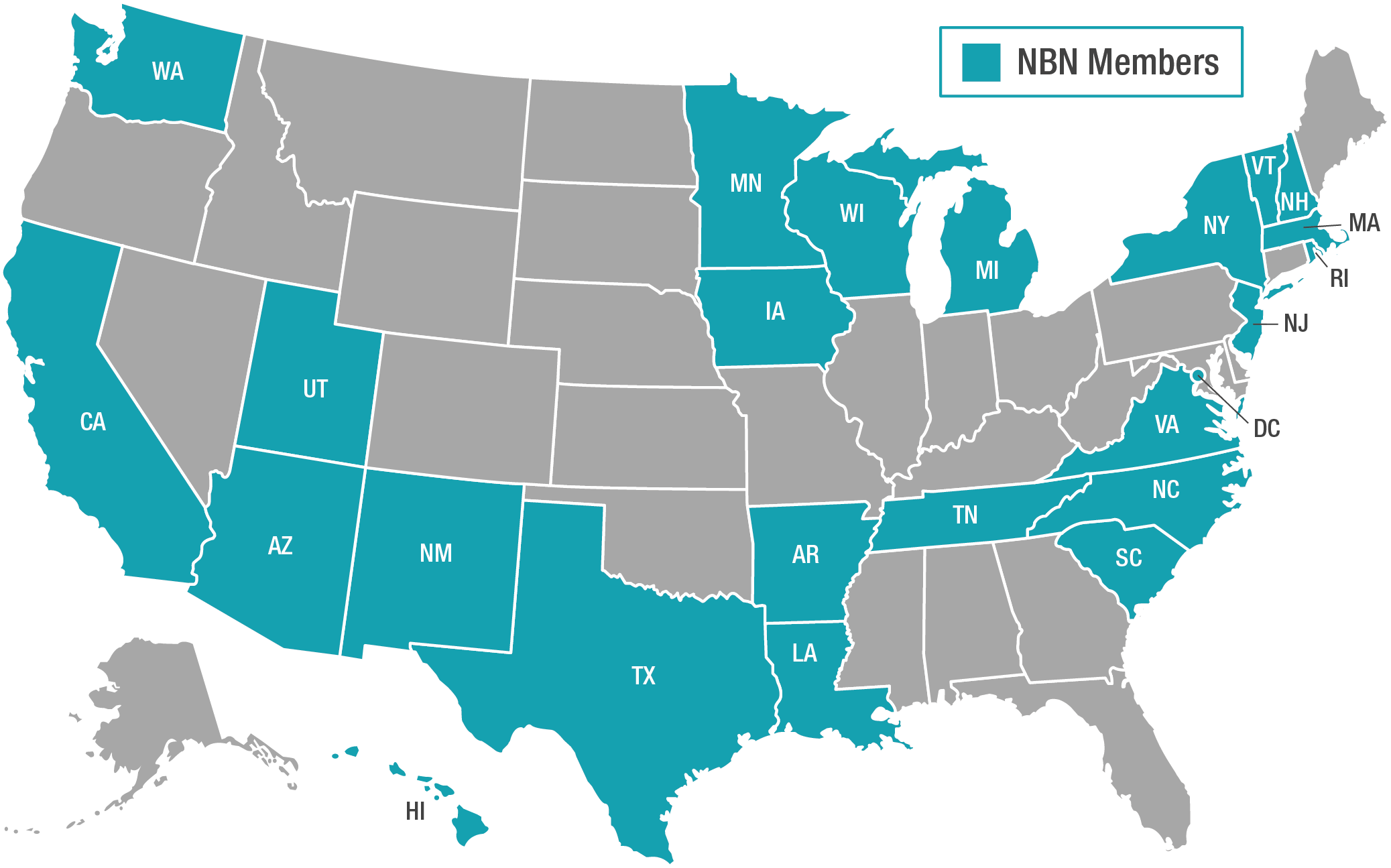
The NBN is a collaboration of federal, regional, state and local laboratories that conduct biomonitoring for use in public health practice and in response to environmental emergencies. The network aims to advance the science of biomonitoring, encourage its use in addressing environmental health questions, and ensure quality practices, which will help produce comparable biomonitoring data.

National Biomonitoring Network Community of Practice 

The National Biomonitoring Network Community of Practice serves as a forum for members of the National Biomonitoring Network to post questions and answers, access resource materials, and interact with others in the community about biomonitoring. Membership is limited to staff at laboratories that are members of the National Biomonitoring Network.

National Biomonitoring Meeting 

Designed for members of the National Biomonitoring Network scientists working in federal, state and local public health laboratories, the National Biomonitoring Meeting is an in-person meeting held biannually to address exposure to emerging environmental contaminants, analytical methods for biological samples, biomonitoring study design, environmental public health tracking, findings from state biomonitoring programs and more. The 2024 National Biomonitoring Meeting was held in Honolulu, Hawai’i.

Join the National Biomonitoring Network

The NBN is currently accepting applications from local, state and federal governmental biomonitoring laboratories integrated into the public health system, and applications are welcomed from laboratories with limited to extensive experience.

Learn more and Apply

NBN Steering Committee

The NBN is led by a steering committee of experts in epidemiology, toxicology, analytical chemistry, occupational health, data analysis, risk communication and public health policy, which guides the development and implementation of the network.

Learn more about the steering committee members below:

Photo of Antonia Calafat

Antonia Calafat

PhD

Chief, Organic Analytical Toxicology Branch

US Centers for Disease Control and Prevention (CDC)

Co-chair

National Biomonitoring Steering Committee

Calafat leads CDC’s biomonitoring programs related to pesticides; polycyclic aromatic hydrocarbons; flame retardants, including polybrominated diphenyl ethers; persistent organic pollutants (e.g., per- and polyfluoroalkyl substances; polychlorinated dibenzo-p-dioxins, furans and biphenyls); and chemicals added to consumer and personal care products (e.g., phthalates, bisphenol A, triclosan, parabens). She fosters fruitful collaborations with leading exposure scientists, toxicologists, epidemiologists and other health scientists. Before joining CDC, Calafat was a Fulbright Scholar and earned her doctorate in Chemistry from the University of the Balearic Islands in Spain.

Photo of Carin Huset

Carin Huset

PhD

Research Scientist

Minnesota Department of Health Public Laboratory

Co-chair

National Biomonitoring Steering Committee
Huset is a research scientist in the Biomonitoring and Emerging Contaminants Unit of the Environmental Chemistry Section at the Minnesota Department of Health (MDH) Public Health Laboratory in St. Paul, MN. She works on the development and implementation of new analytical methods and coordinates with the laboratory’s partners to plan, design and implement biomonitoring projects. Huset earned a BA in Chemistry from the College of St. Catherine and a PhD in Chemistry from Oregon State University. She joined MDH in 2008 after postdoctoral work at the University of South Carolina.
Photo of Henry Anderson

Henry Anderson

MD

Professor

University of Wisconsin - Madison
Anderson was, from 1989 until retirement, the State Environmental and Occupational Disease Epidemiologist and the Chief Medical Officer at the Wisconsin Division of Public Health, Department of Health Services. He currently holds adjunct professorships in the Department of Population Health Sciences at the University of Wisconsin—Madison's School of Medicine and Public Health, and the Center for Human Studies at the University of Wisconsin Institute for Environmental Studies. Anderson has conducted public health population surveillance and numerous epidemiological studies using biomarkers of chemical exposure, worked closely with multiple public health laboratories and authored over 275 publications.
Photo of David Balshaw

David Balshaw

PhD

Branch Chief

Exposure, Response, and Technology Branch, National Institute of Environmental Health Sciences
Balshaw is chief of the Exposure, Response, and Technology Branch at the National Institute of Environmental Health Sciences (NIEHS), where he has developed and overseen many of the Institute’s efforts in developing novel approaches for exposure assessment, including the Exposure Biology Program and efforts to implement the exposome including the Children’s Health Exposure Analysis Resource.  His doctoral work in Pharmacology and Biophysics at the University of Cincinnati was followed by postdoctoral research in Biochemistry and Biophysics at the University of North Carolina at Chapel Hill.  After completing his postdoctoral fellowship, Balshaw joined the National Institutes of Health as a program officer at the National Heart, Lung, and Blood Institute, before transferring to NIEHS in 2003. 
Photo of Heidi Bojes

Heidi Bojes

MPH, PhD

Environmental Epidemiology and Disease Registries Director

Texas Department of State Health Services
Bojes has over 20 years of service in public health. Her work includes overseeing state registries for birth defects and cancer, child and adult elevated blood lead levels, and pesticide poisonings, as well as conducting environmental epidemiological and toxicological studies. She received an MPH in Environmental Science and Engineering and a PhD in Toxicology—both from the University of North Carolina at Chapel Hill—and completed postdoctoral training at the University of Texas at Austin and at Medical Research Council, University of Leicester, in Leicester, England.  
Photo of Zhihua (Tina) Fan

Zhihua (Tina) Fan

PhD

Director of Environmental and Chemical Laboratory Services

New Jersey Department of Health
Fan has extensive experience in exposure science, environmental health, environmental sampling and analysis. She has published more than 40 scientific research articles, five book chapters/invited articles and more than 50 presentations at a variety of scientific conferences. Fan currently serves on the US EPA Science Advisory Board and the Editorial Review Board of the Journal of Exposure Science and Environmental Epidemiology. Fan joined the New Jersey Department of Health (NJDOH) in 2014, before which she was an associate professor in the Exposure Science Division of Rutgers University's Department of Environmental and Occupational Medicine.
Photo of Brad Goodwin

Brad Goodwin

MS, PhD

Lieutenant Commander

US Public Health Service

Deputy Director

Office of Community Health Hazard Assessment, Agency for Toxic Substances and Disease Registry
Goodwin has been stationed at the Agency for Toxic Substances and Disease Registry (ATSDR) for over ten years. He supports operations of the office and oversees science, policy and communications functions, and staff within the office. He also serves as an office subject matter expert on air quality monitoring and modeling, data collection efforts, and per- and polyfluoroalkyl substances (PFAS). He previously led ATSDR’s PFAS exposure assessments at sites near current or former military bases. He specializes in collection of environmental and biological data to support public health decision making. Prior to joining ATSDR, he served as an American Association for the Advancement of Science (AAAS) Science and Technology Policy Fellow at the US Environmental Protection Agency and spent five years in environmental consulting working on projects related to air and water quality monitoring and health. He has a PhD in Atmospheric Science from Ohio State, an MS in Environmental Engineering from Washington University, and a BS in Chemical Engineering from Washington University.
Photo of Danelle Lobdell

Danelle Lobdell

MS, PhD

Environmental Health Scientist (Epidemiologist)

Office of Applied Sciences and Environmental Solutions, Children’s Health Protection Division, US Environmental Protection Agency (EPA)
Lobdell’s research focuses on cumulative environmental exposures and associated health outcomes, including perinatal and child health effects, as well as the development of environmental public health indicators. She leads the team behind the Environmental Quality Index, a publicly available tool characterizing environmental quality across all US counties and, most recently, at the census-tract level. Since 2004, Lobdell has served as the exposure and health theme lead for EPA’s Report on the Environment. 
Photo of Marc Nascarella

Marc Nascarella

PhD, CPH

Associate Professor

Massachusetts College of Pharmacy and Health Sciences 
Nascarella is a health scientist with broad training in public health, toxicology, epidemiology and exposure science. He currently serves as a full-time graduate faculty member at the Massachusetts College of Pharmacy and Health Sciences. His professional interests are focused on applied prevention science and how to rapidly translate the best available science into practical tools that inform policy, public health practice and healthcare delivery. He serves as an advisor to government and non-governmental agencies on approaches to reduce the contribution of environmental contamination to human disease. He has led initiatives focused on building capacity in underserved domestic and international communities and served as a lead investigator on multiple large-scale biomonitoring studies in the US and abroad. Efforts have largely focused on identifying individuals in residential and occupational settings with a disproportionate burden of exposure to metals. Other efforts include establishing regionally appropriate baseline (population-level) estimates of exposure to PCBs as well as metals and metalloids. In addition to biomonitoring of environmental contaminants, he has conducted biomonitoring studies to characterize baseline levels of marijuana and marijuana metabolites in individuals who regularly consume regulated retail marijuana products. Nascarella previously served as the State Toxicologist for the Department of Public Health in the Commonwealth of Massachusetts.
Julianne Nassif

Julianne Nassif

MS

Senior Director of Environmental Health

Association of Public Health Laboratories

Ex-officio

National Biomonitoring Network Steering Committee
In her role at APHL, Nassif serves as an ex-officio member of the NBN Steering Committee. Her professional experience includes decades of human biomonitoring work in the public health laboratories. She aims to ensure a multi-disciplinary approach to human biomonitoring to inform and evaluate public health practice. 
Photo of Patrick Parsons

Patrick Parsons

PhD

Director Division of Environmental Health Sciences

New York State Department of Health—Wadsworth Center

Professor of Environmental Chemistry

State University of New York—Albany
Parsons earned his PhD degree in Chemistry from Bedford College, University of London, England, and was a Visiting Fellow at the National Institutes of Health. In his more than 40 years as a chemist specializing in trace element analysis, Parsons has made contributions to preventing childhood lead poisoning, human biomonitoring studies of toxic metals, and novel methods based on analytical atomic spectrometry. His laboratory at Wadsworth has been supported with external funding from NIH, CDC and FDA. He is a Chartered Chemist and Fellow of the Royal Society of Chemistry. Parsons earned his PhD degree in Chemistry from Bedford College, University of London, England, and was a Visiting Fellow at the National Institutes of Health.
Photo of Jessica Reiner

Jessica Reiner

PhD

Research Chemist, Group Leader

Biochemical and Exposure Science Group, National Institute of Standards and Technology
Reiner leads the Biochemical and Exposure Science Group at the National Institute of Standards and Technology. Her work centers on improving analytical measurements for emerging chemicals by developing reference materials and measurement methods. She leads a team that provides essential measurement science, standards and data for environmental and human health, develops and certifies reference materials, and collaborates with partners to strengthen and harmonize chemical measurements globally.
Photo of Fuyuen Yip

Fuyuen Yip

PhD, MPH

Foundational Data Lead

Office of Public Health Surveillance, Data, and Technology, CDC
Yip works within the Inform and Disseminate Division of CDC’s Office of Public Health Surveillance, Data, and Technology. Prior to this position, she served as chief of the Emerging Environmental Hazards and Health Effects Branch and acting chief of the Environmental Public Health Tracking Branch in the Division of Environmental Health Science and Practice, National Center for Environmental Health. She holds degrees in environmental health sciences from Yale University and University of Michigan.