.png?sfvrsn=a4dc1c5f_6)
Public Health Laboratory Work May Be Invisible—but It’s Also Indispensable: Perspective From a Public Health Laboratory Professional
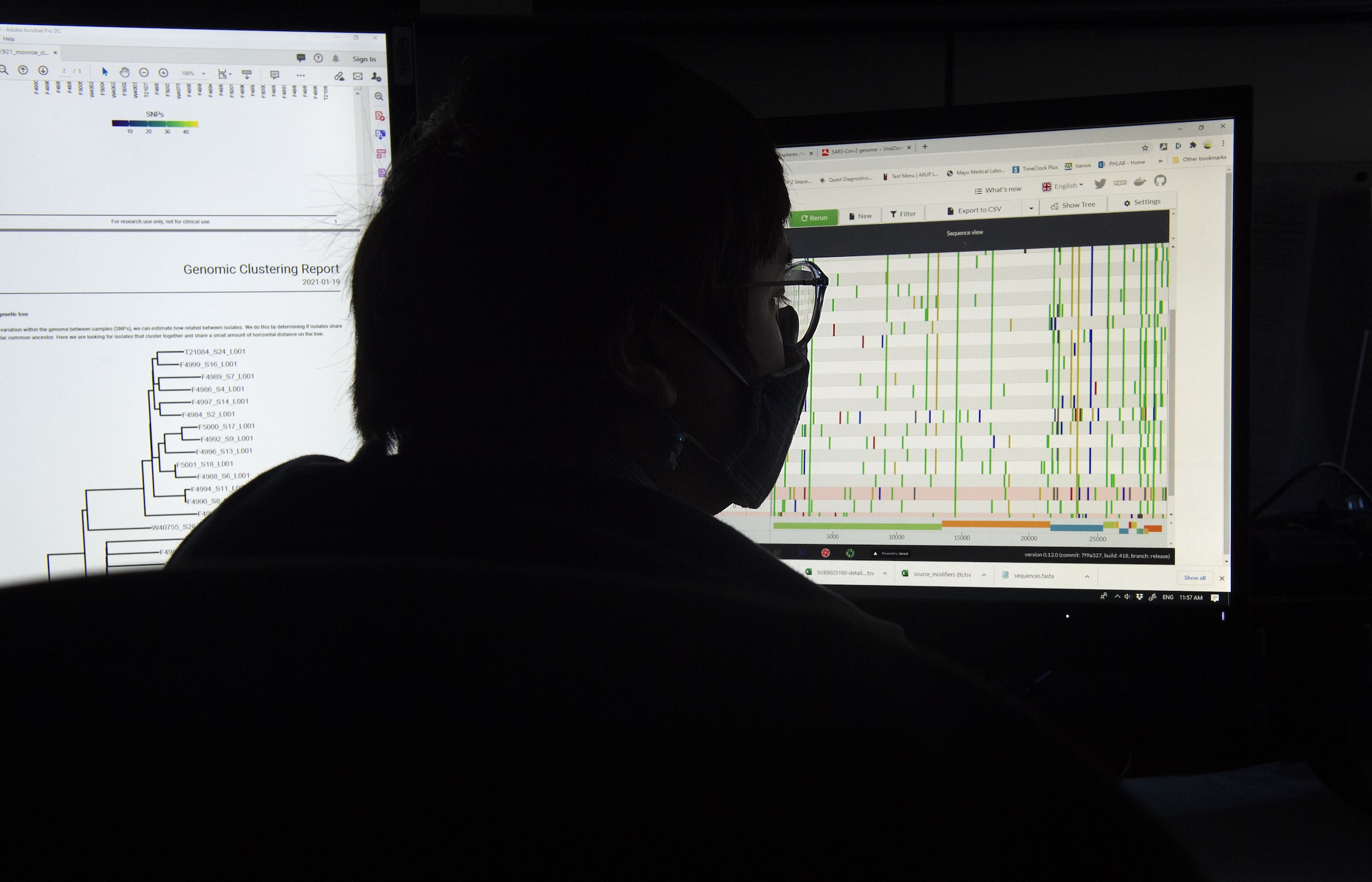
Pathogen genomics is not glamorous. There might be a press release when a surveillance report reveals something terrible. But when it shows the threat was contained, that things worked? Silence. And I keep thinking about what that silence actually represents.
Behind that silence is a process most people never see. Samples collected, sequenced, analyzed, interpreted, acted on. Each step done by people who understand that getting it right—and getting it right on time—can change the outcome for entire communities.
When I was at the Los Angeles County Public Health Laboratory, we stood up SARS-CoV-2 genomic surveillance within months and mpox sequencing within weeks. I was so lucky to have worked alongside people who made that possible. Not because the pay was competitive (it wasn’t—clinical labs paid so much more) but because it mattered. I watched colleagues who started their shift at 8:00 am still processing specimens and setting up diagnostic tests at 10:00 pm for pathogens we were still learning about in real time. Their supervisors stayed even later, reporting results and setting things up so the next shift could walk in and hit the ground running. Working under biosafety conditions with agents you don't fully understand carries a weight that's hard to describe. You think about exposure. You think about your family. And you show up anyway, because the public depends on you, whether they know it or not.
Public health laboratory work doesn't trend on Instagram. There's no influencer moment in setting up a sequencing run at 10:00 pm. The people who do it well are largely invisible to the communities they protect, and most of them prefer it that way.
Now I'm part of a much larger effort to build genomic surveillance capacity across Southeast Asia. The scale is different, but the principle is the same: Train the right people, build the right systems and make sure data gets generated and interpreted well enough that someone can act on it in time.
There's money in genomics. Oncology, pharmacogenomics, precision medicine. The market figured out how to value sequencing when the return is individual and billable. It's when genomics is used to protect populations from infectious disease that there's never a big launch party with shareholders. No ribbon cutting. No product release. Its return doesn't fit neatly on a dashboard. It shows up in the outbreak that stayed controlled, the resistant organisms caught early and the response that happened while there was still time. The benefit of the return shows up in communities that, if things work properly, never had to know how close they came.
The cost of building these systems is easy to assess. The cost of not having them rarely becomes visible until it's too late.
Some of the most important returns in public health are written in the things that never got worse. It is important to communicate that to the public.