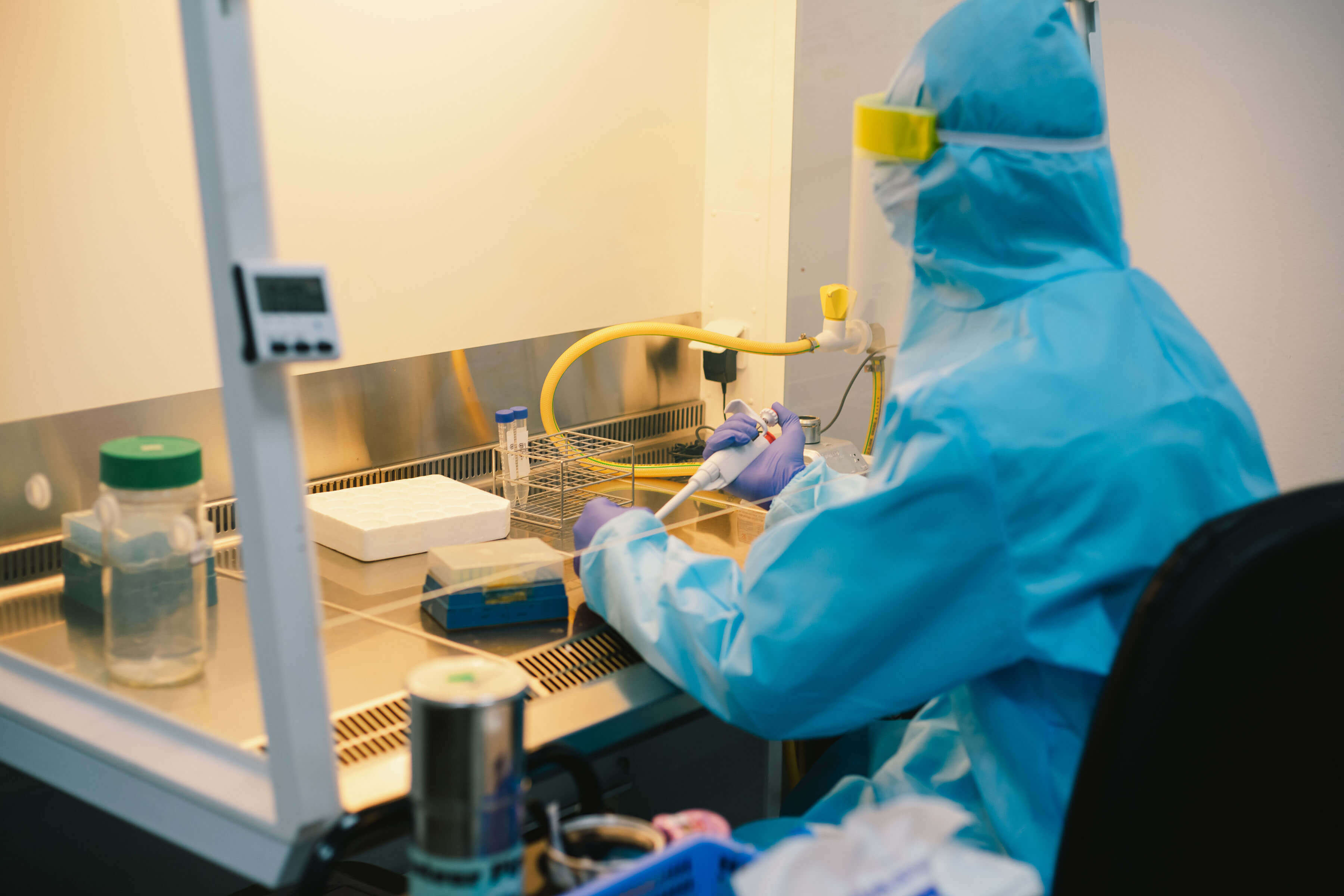
Public health laboratories play a vital role in detecting, responding to and recovering from emergencies that threaten community health. Through planning, training and coordination, APHL helps ensure systems and staff are ready to act quickly and effectively when public health threats arise.
Contact the Public Health Preparedness and Response team: [email protected]
Current Public Health Responses
APHL has de-activated our ICS response for Andes virus. Visit our Public Health Response Coordination page for information and resources from this response.
We continue to support the response to an outbreak of Ebola Bundibugyo disease in the Democratic Republic of Congo and Uganda. Find response updates and related resources:
Public Health Laboratories Must Be Ready to Respond
Public health laboratories are on the front lines of detecting and responding to health threats. Preparedness ensures labs have the people, systems and resources needed to act quickly, protect communities and support recovery during public health emergencies.
Bioterrorism: A Turning Point for Preparedness
Before the anthrax attacks of 2001, bioterrorism was largely an abstract concern for most Americans. That changed with the delivery of the first anthrax-laced letter, transforming bioterrorism from a distant threat into an immediate reality and forever altering the way the nation responds to such dangers.
APHL Support of Laboratory Readiness and Response
To help ensure public health laboratory systems are ready to detect, respond to, and recover from any public health threat, APHL provides scientific guidance, logistical coordination, and operational support to help laboratories maintain readiness and resilience. We also enhance communication and collaboration across the US laboratory system—connecting public health laboratories with partners in both the public and private sectors.
APHL Readiness and Response Activities:
Providing technical assistance and response coordination for state, local, territorial, US Affiliated Pacific Island and international laboratories.
Offering expert guidance on laboratory equipment, supplies and best practices.
Gathering insight from members and advocates for policies that strengthen readiness and response by publishing position statements on issues impacting public health laboratories.
Maintaining the APHL Public Health Preparedness and Response Committee with subject matter experts from public health laboratories, partner organizations and other preparedness and response experts.
Through these efforts, APHL helps ensure that public health laboratories are prepared and equipped to respond quickly and effectively to all types of public health emergencies.
This report provides a summary of the data collected during APHL's 2024 All-hazards Laboratory Preparedness Survey, which evaluates the current state of preparedness at US state public health laboratories.
Public Health Preparedness and Response, Emergency Preparedness and Response, Environmental Exposures
This editable template provides instructions, guidance, and sample text for the development of continuity of operations plans.
Public Health Preparedness and Response
Federal Involvement
Funding
Since 2001, significant federal and state investments in public health preparedness have strengthened laboratory capability and capacity to respond to health threats of all types. These investments proved invaluable when responding to natural disasters and outbreaks such as Middle East Respiratory Syndrome (MERS), Ebola and mpox.
Public health laboratories rely on CDC for more than 80 percent of their funding through the Public Health Emergency Preparedness (PHEP) Cooperative Agreement. These funds, averaging about $700 million annually, are distributed among the laboratories in all 50 states, Washington DC, Los Angeles County, New York City and Puerto Rico. Laboratories use these funds to support personnel, equipment, maintenance contracts, training, supplies and other necessities.
Recent surveys of public health laboratories report federal funding cuts have reduced operating budgets to razor thin margins.
Policy
APHL actively tracks
federal policy and regulatory developments that affect public health
laboratories and preparedness programs. Through policy review and position
statements, we help represent laboratory perspectives and inform national
decision-making.
Position Statement on Preparedness Funding
Public health laboratories are a critical asset to the national laboratory system that must be fully resourced to respond at the front line to all-hazard threats. Therefore, it is essential to our nation’s preparedness that PHLs receive increased funding to recruit and retain highly trained technical staff, purchase and maintain sophisticated instrumentation and modernize the facilities necessary to respond to all-hazard threats quickly and reliably at any time.
This platform helps public health labs share equipment, testing supplies, and consumables to optimize resources. It supports requests during routine operations, emergencies, or shortages. It is solely for transferring materials—not for exchanging specimens or samples.