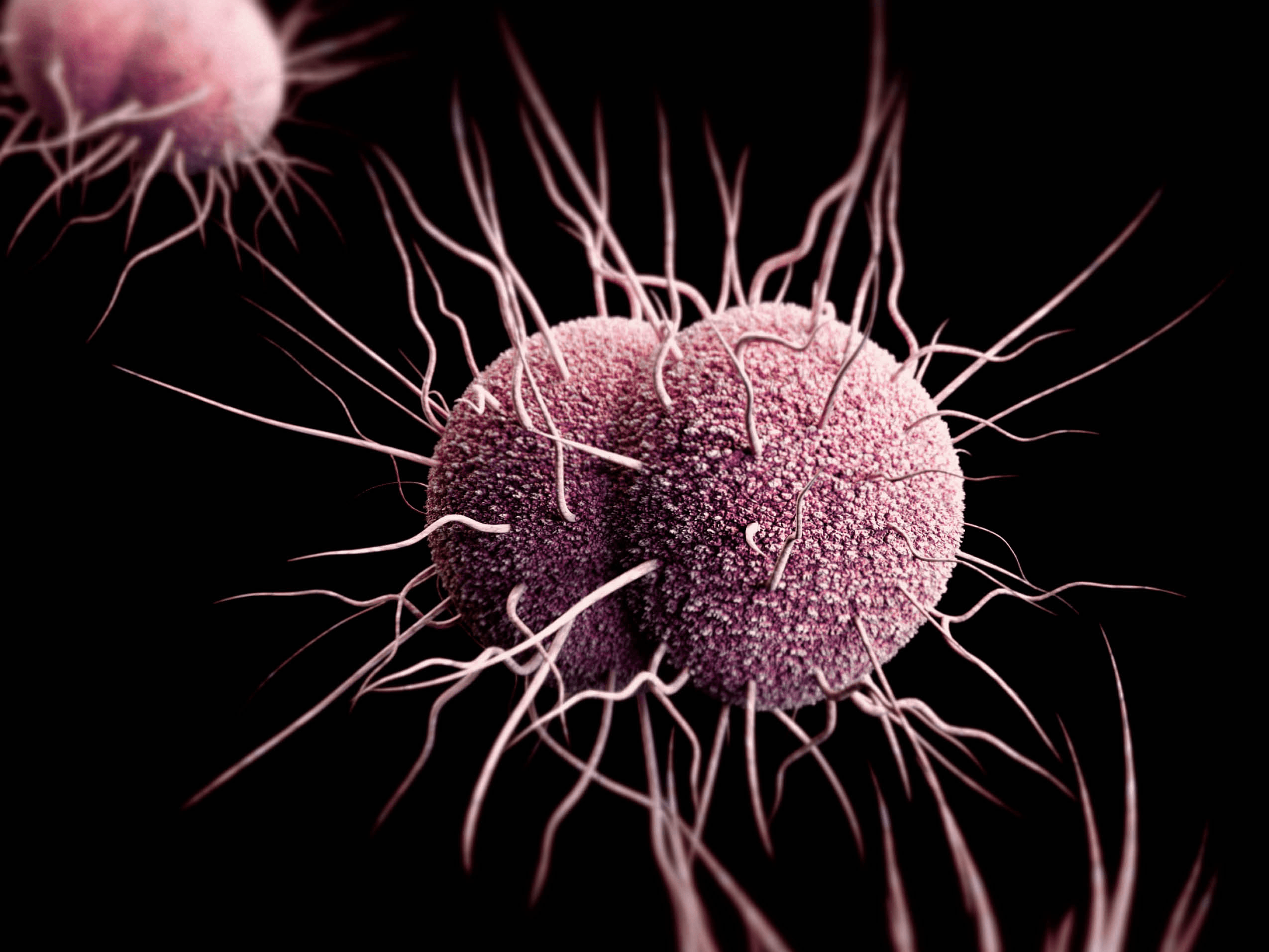
Sexually Transmitted Infections

Appropriate diagnosis and treatment for sexually transmitted infections (STIs) are crucial for patient management, as well as to monitor and control outbreaks. APHL develops resources and training opportunities designed to support laboratory professionals in strengthening STI diagnostic and surveillance capacity.

Questions?

Contact the Infectious Diseases team: [email protected]

APHL'S ROLE

Supporting Best Practices in Testing for Sexually Transmitted Infections

Public health laboratories serve an important role in performing high quality testing for STIs—especially those associated with antimicrobial resistance—which helps improve reproductive health and prevent long-term consequences, including infertility and cancer. APHL develops and promotes best practices, recommendations, guidelines and trainings related to STI testing through relationships with public health laboratories and the US Centers for Disease Control and Prevention (CDC) Division of STD Prevention (DSTDP).  

APHL surveys public health laboratories every few years to assess STI testing capacities, capabilities and practices to help understand the landscape and inform education, training and advocacy efforts. Additionally, APHL has supported public health laboratories performing testing for STIs for decades. If you are interested in historical documents including previous survey reports visit the ID Resources Page. 

Cross-Cutting Resources

Disease Specific Resources

Chlamydia trachomatis—the causative agent of Chlamydia infection—and Neisseria gonorrhoeae—the causative agent of gonorrhea—cause a significant burden of disease globally. Of particular concern, gonorrhea has progressively developed resistance to the antibiotic drugs prescribed to treat it, severely limiting available treatment options. Further resistance will significantly complicate the ability of providers to treat gonorrhea successfully. For this reason it is critical to maintain the capability to monitor and detect emerging drug resistance in N. gonorrhoeae

APHL, CDC and numerous subject matter experts convened to review the latest available evidence for laboratory and point-of-care testing for Chlamydia trachomatis and N. gonorrhoeae. The outcomes of that review were published in 2026. 

2014 CDC Testing Guidelines for CT and GC

Tool / Work Aid
2023

This document provides an updated resource to help laboratories select the most appropriate specimen transport systems and processes for effective culture of Neisseria gonorrhoeae.

Infectious Diseases, STIs
Fact Sheet
2019

This document discusses various N. gonorrhoeae testing methodologies, and possible reasons why test results may be different than expected.

Infectious Diseases, STIs
Training
2024

This course will provide an overview of the basics of the gonorrhea, provide an overview of AST for N. gonorrhoeae, and provide clear instructions for proper setup and interpretation of Etest® for N. gonorrhoeae.

Infectious Diseases, STIs, Training
Diagnosis of Treponema pallidum—the causative agent of syphilis—relies on a combination of serologic assays that detect treponemal and nontreponemal antibodies. APHL has generated resources to improve best practices in laboratory diagnostics for syphilis, and hosted an expert consultation in partnership with CDC DSTDP which led to CDC guidance published in 2024 for syphilis testing in the US. 
Guide / Guidance
2020

A description of language for laboratory professionals, clinicians, healthcare workers, and other professionals to use when reporting results from the two most commonly used syphilis serologic testing algorithms for Treponema pallidum infection.

Infectious Diseases, STIs
Training
2025

This series of three courses focuses on Syphilis diagnostic testing. The sessions include: Background and History, Serologic Assays and Algorithms and case studies

Infectious Diseases, STIs, Training
Training
2023

This course will inform on the procedure used to perform manual Rapid Plasma Reagin, or RPR, testing (both qualitative and semi-quantitative), result interpretation, reporting and additional testing considerations

Infectious Diseases, STIs, Training

Mycoplasma genitalium (MG or MGen) is a small bacterium that has been strongly and consistently associated with non-gonococcal urethritis (NGU). M. genitalium belongs to the bacterial class, Mollicutes, which lack cell walls, making them inherently more resistant to antibiotics that target cell wall synthesis and up to 50% of M. genitalium isolates are resistant to azithromycin.   

Fact Sheet
2020

This document summarizes facts about M. genitalium, a bacterium that is associated with a variety of symptomatic and asymptomatic infections.

Infectious Diseases, STIs
Report
2022

Summary of results from most recent survey of public health laboratories on testing for Mycoplasma genitalium.

Infectious Diseases, STIs
Trichomoniasis is a common curable sexually transmitted disease caused by the protozoan pathogen, Trichomonas vaginalis. However, it is not a reportable nor a nationally notifiable condition. Available diagnostic tests from T. vaginalis range from basic microscopy to nucleic acid amplification assays. 
Fact Sheet
2016

An overview of current information about Trichomonas vaginalis: clinical information, epidemiology, diagnostic tools, screening and treatment, and diagnostic assays.
Infectious Diseases, STIs
Learn and Grow

STI News, Events, Training and Webinars

Lab Culture News article
05.21.24
By Donna Campisano, specialist, Communications, APHL Nearly 650,000 cases of gonorrhea were reported in the U.S. in 2022, making it the second-most commonly notifiable sexually transmitted disease (STD) in this country. Chlamydia takes the number-one...
Infectious Diseases

Trainings

Archived Webinars

Search All Infectious Diseases Trainings and Events 

Visit the APHL Training Hub to search our training materials, access courses through the APHL Learning Center, and find upcoming webinars via the Event Calendar.

Visit the Training Hub

Need more?

Search all Infectious Diseases Resources