.png?sfvrsn=a4dc1c5f_6)
How Can a Radiochemistry Certificate Enhance Your Career? Your Laboratory? Your Community? Recent Graduates Share Their Insights
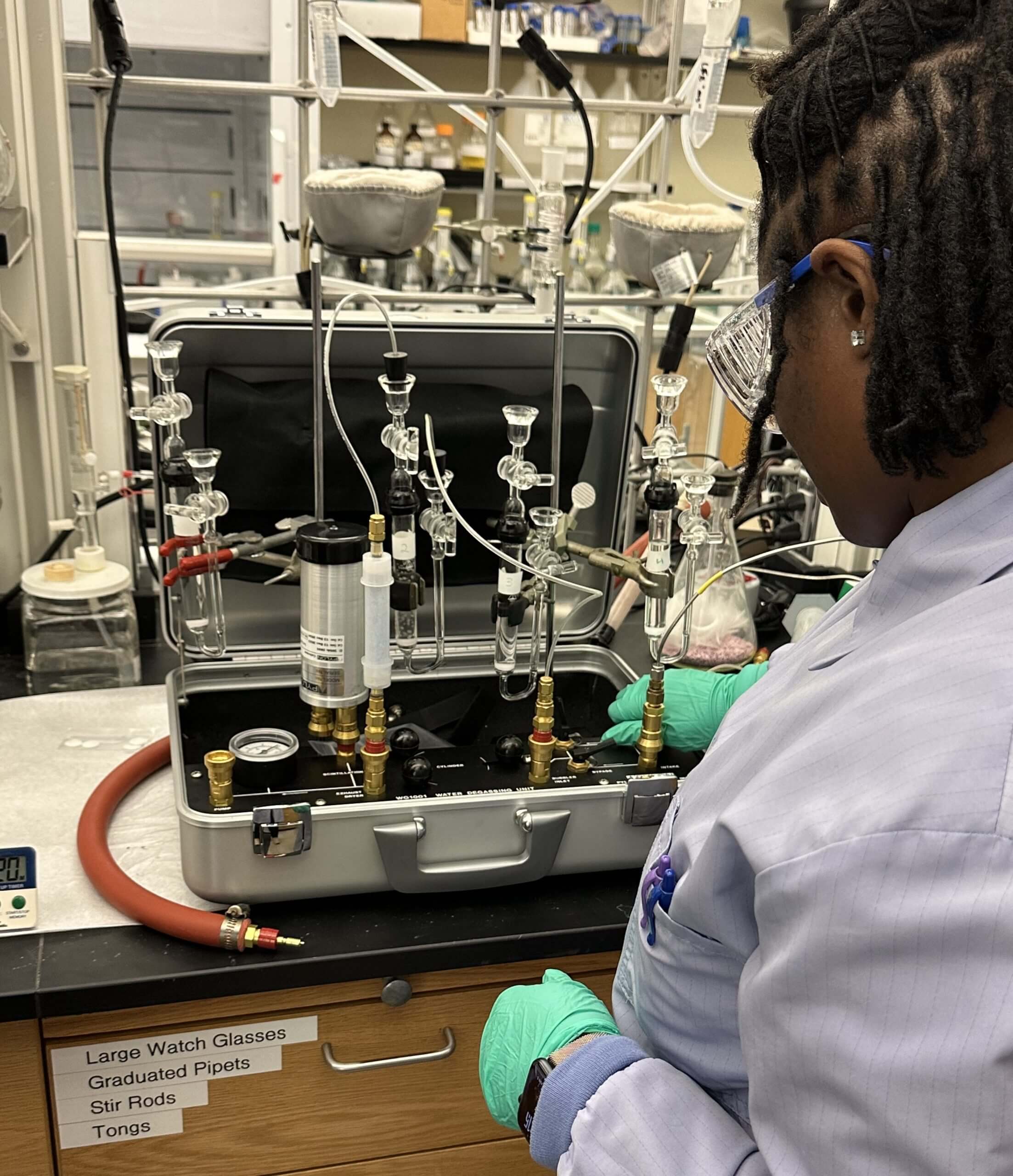
The first cohort of 12 students recently graduated from the University of Iowa (UI) Radiochemistry Graduate Certificate Program. The program was developed and launched with financial and technical support from APHL and the US Centers for Disease Control and Prevention (CDC). These two partners were also able to provide each student with a scholarship that covered their tuition, books and travel expenses to in-person events.
The students gained knowledge in radiochemistry concepts and invaluable experience in wet chemistry techniques and analytical instrumentation. Among other skills, these students learned to identify and quantify radioactive materials—such as radon and uranium—in the air, water and soil. They further developed their understanding of radiochemistry separation concepts, so radioactive elements could be isolated more efficiently from a sample and analyzed. They enhanced their knowledge of quality assurance and safety principles, thereby keeping themselves, their fellow laboratory workers and their communities safer.
The UI Radiochemistry Certificate Program is uniquely designed for students and working laboratory professionals. The 10 courses totaling 12 semester hours are offered online and taught by UI faculty, with two immersive, intensive, in-person laboratory experiences required.
What do laboratory professionals who’ve been through the program have to say about its benefits? How has completing the program grown their careers and enhanced the safety of their communities? We asked a few for their takeaways. Here’s what they had to say:

How has the program benefited you in terms of skills learned? Is there something you learned about testing or handling radiochemical materials that you didn’t know before?
“During an in-person session of the certificate program, I was introduced to a few radiochemical methods that I had not performed before,” said Virginia Littell, a chemist with the Washington State Department of Health Public Health Laboratory. “One such method was EPA Method 906.0 Tritium in Water, which is a method for measuring tritium, a radioactive form of hydrogen that can be found in drinking water. I had not received any training on methods such as this one, and I thought that having hands-on experience was a great learning opportunity. Our lab performs tritium testing on water, and I was able to see how our setup of the glassware and heating apparatuses was different based on the layout of our lab space.”
Hosea Mak, a chemist with the Radioanalytical Services Laboratory within the New Jersey Public Health and Environmental Laboratories, noted that one of the key elements he learned was how to manage radiological spills in the laboratory.
“I have not experienced that level of spills before, so I found going through an in-person simulation of that process to be very helpful,” Mak commented. “I have also been able to learn about different radiological procedures that our laboratory does not currently perform. While I do not foresee our lab switching over to these methods, they are nonetheless valuable as they are commonly used in other labs. It is also good to know these methods to understand more of the chemistry that goes into getting our final result.”
How has taking this program benefited your lab?
Having fellow radiochemists—as well as the UI faculty—to reach out to with questions and ideas topped the list for the students we spoke to.
“This program has been a gem; we truly gained a radiochemistry friendship and community with the other labs,” said Saluta Sanders, a chemist at the Arkansas Department of Health, Glen F. Baker Public Health Laboratory. “Being in communication with others in the program and having a common bond, I can say I feel more comfortable being a reference to my peers when needed.”
How has this program helped make your communities safer?
All the participants interviewed said the program has given them invaluable experience handling and testing radioactive materials, thereby increasing the accuracy of lab results involving these elements.
“I am starting to think about how to apply more accurate uncertainty estimates for our activity reports,” Mak said. “Each measurement of activity has an uncertainty associated with it, and that’s derived from a variety of factors such as how heavy the sample is, the temperature and the values provided by the instrument. The hope is that with more precise activities and uncertainties, the clients we work with can be more assured that the results they’re receiving from the laboratory are from quality work, whether it be through the chemistry performed or the instrument’s performance.”
“This program has provided a means for self-assurance and certainty when it comes to material/extractions,” added Sanders. “We care for the safety of our community, which is why our team wanted to be a part of this program. I feel equipped and ready to ensure that communities in Arkansas are safer thanks to the knowledge I learned in this program.”